A Department of Justice filing says Binance lost control of 32 cryptocurrency wallet addresses on October 29, 2026, during a theft the filing attributes to North Korea’s Lazarus Group and describes as $6 billion.
Prosecutors say hackers posing as job recruiters persuaded a Binance employee to run malware. They wrote that “criminal actors exploited EIP-7702 and took control of Binance’s hot wallets.”
Ethereum Improvement Proposal 7702 lets a standard Ethereum wallet attach smart-contract code. According to the filing, the malware approved EIP-7702 requests, and those approvals handed the wallets’ execution logic to attackers away from Binance’s offices.
In a complaint the previous day, November 23, 2026, U.S. prosecutors wrote: “Although Subject Addresses E-JJ are on Binance’s platform, it appears Binance no longer controlled them.” The filing says the EIP-7702 authorizations had passed control to North Korea.
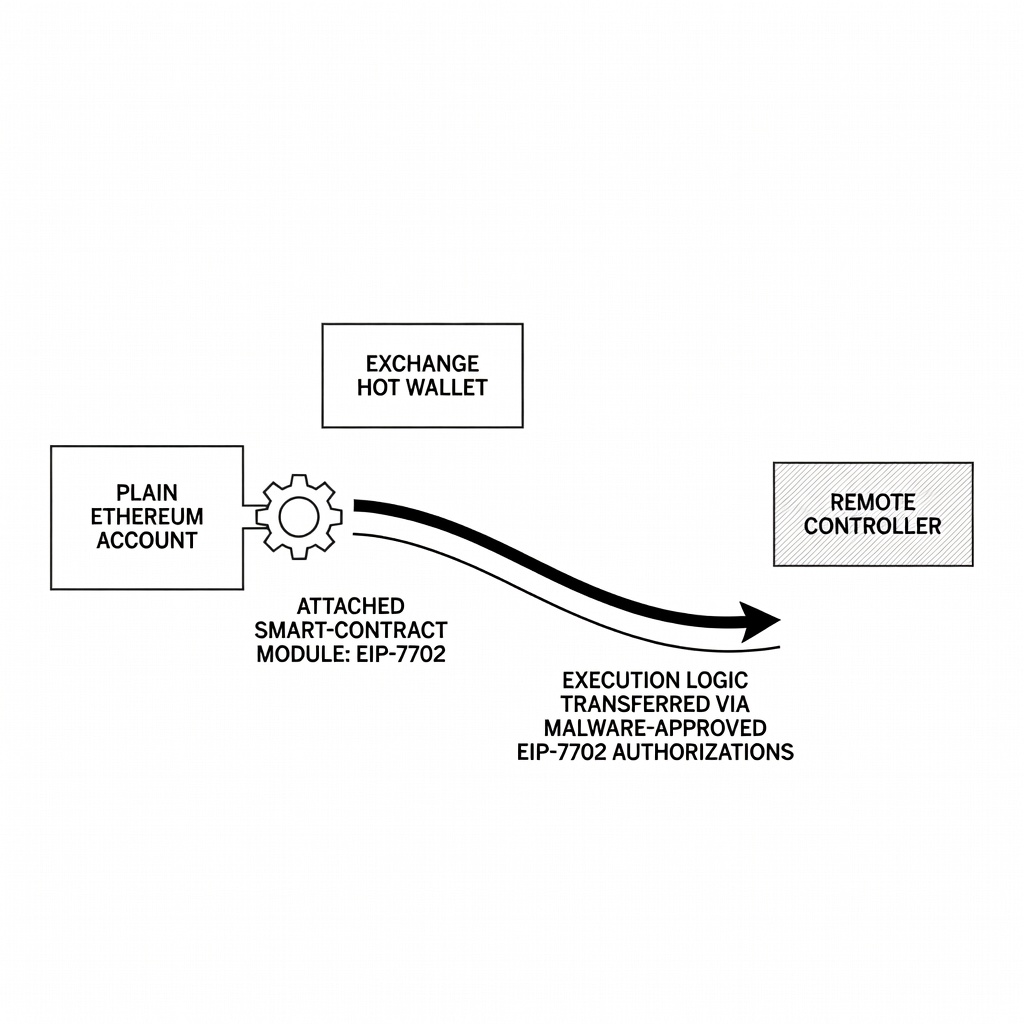
Blocklisted USDC, separate from the $6 billion figure
Those 32 blocklisted wallets hold nearly $342 million of Circle-issued USDC. That is the stablecoin balance tied to the addresses in the filing, not the $6 billion figure used for the wider theft.
Prosecutors say the frozen addresses remain “under the control of Lazarus Group/APT38 criminal actors.”
Circle cannot transfer these blocklisted tokens. It has agreed to maintain its blacklist and to mint replacement USDC upon forfeiture. That arrangement applies to tokens the issuer cannot move in this case. It is not a statement that USDC is insured, guaranteed, or always redeemable, and the filing is not presented as an audit of reserves or of redemption terms.
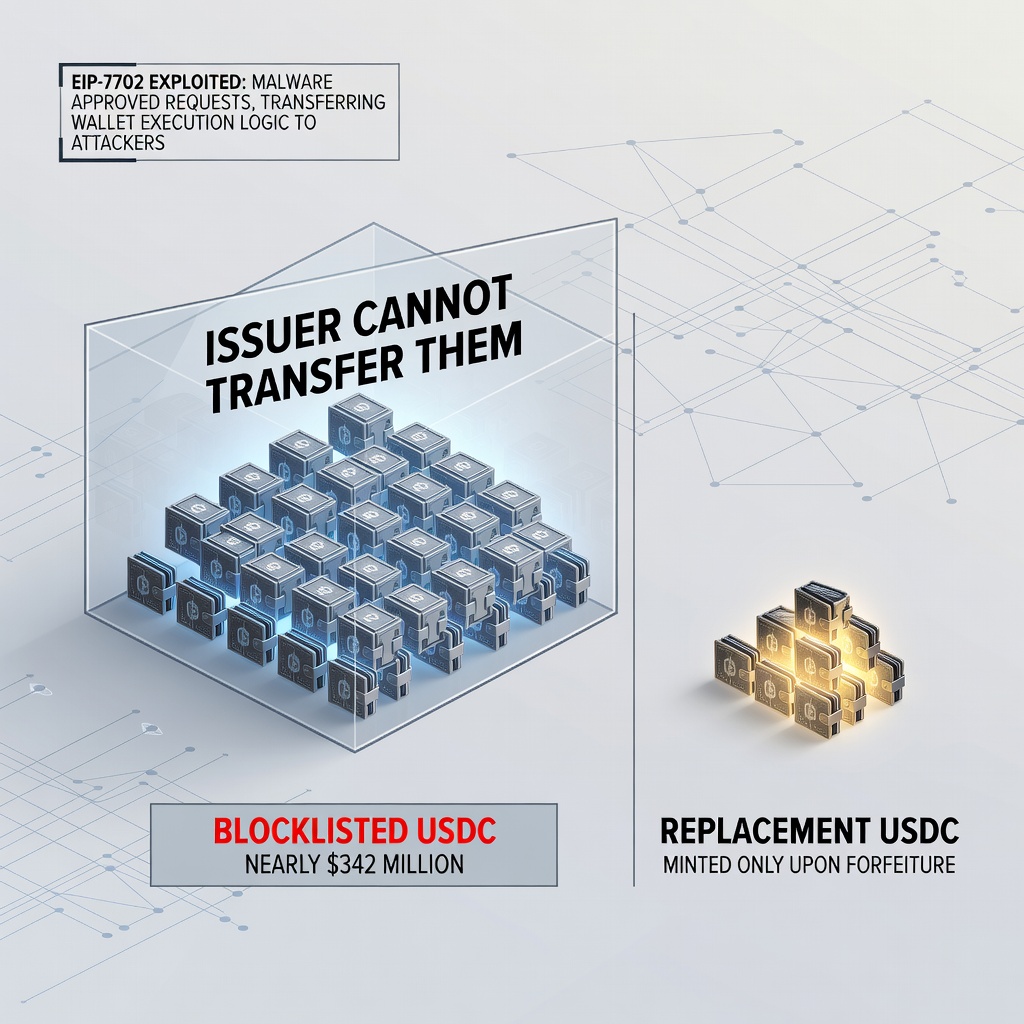
Issuer control versus what Binance said
On October 30, 2026, Binance co-CEO Richard Teng said, “Your money is safe.” On November 3, 2026, a Binance update said, “This should not have happened.”
The prior year, Wintermute estimated that 48% of Ethereum EIP-7702 uses were linked to crime. That is an estimate of how the feature was being used, not a measurement of these 32 addresses.