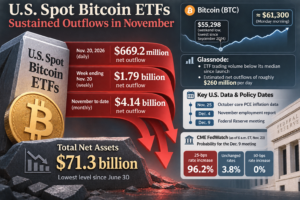
As reported on November 19, 2026, Bitcoin had fallen back toward $62,000 for the second time in less than a week. Ether dipped below $1,750 and touched $1,735. The decline came as investors weighed whether the Federal Reserve might raise rates more than expected in December and again in January 2027. The original report identified no stablecoin-specific development; the immediate story was interest-rate expectations and crypto-market liquidity.
December’s decision remained open
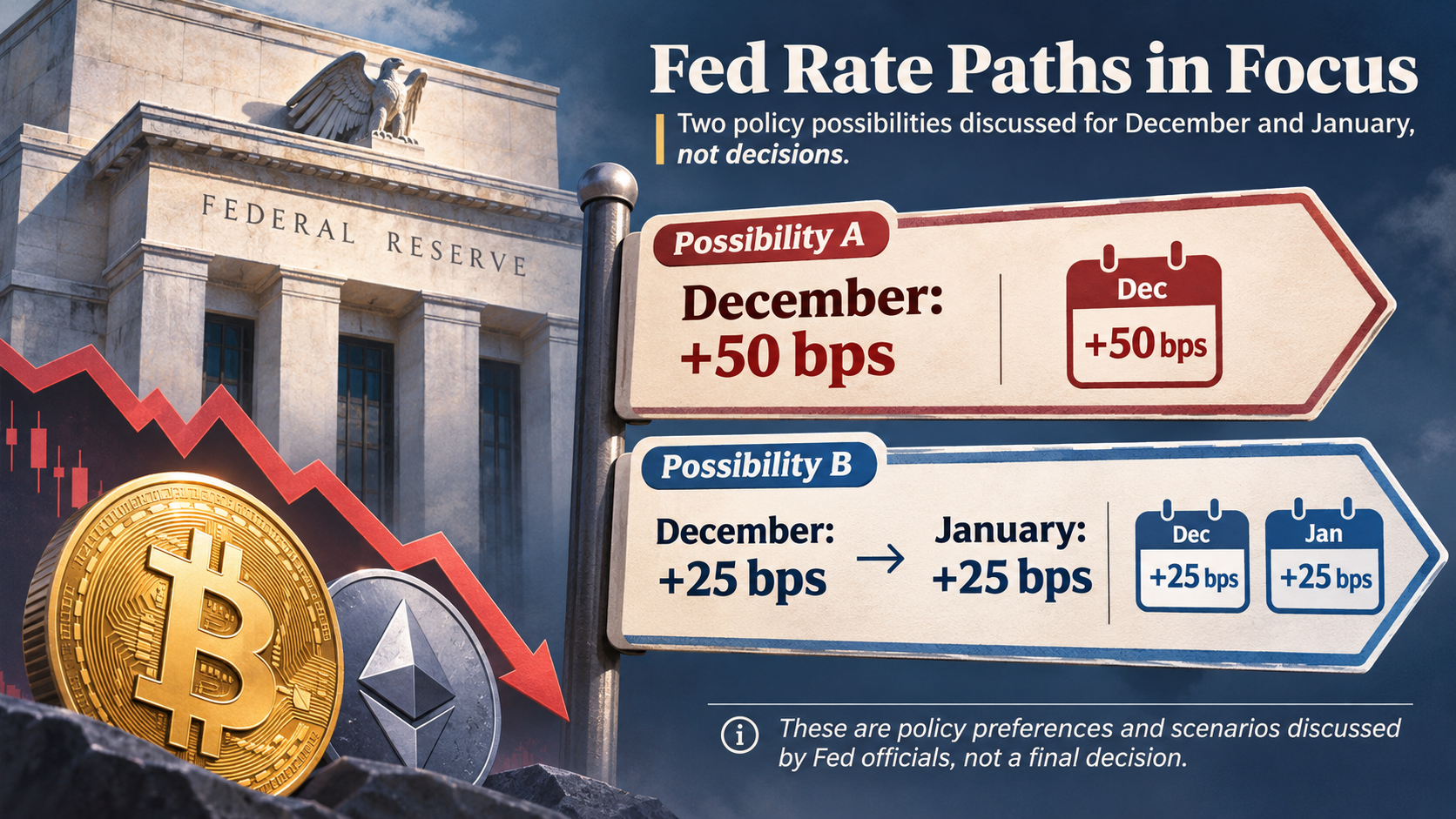
Fed Governor Christopher Waller told CNBC that inflation was moving in the wrong direction, with price pressures spreading to services. He favored a 50-basis-point increase in December, though he said a 25-basis-point move could work if the Fed clearly signaled another 25-basis-point increase in January. These were policy preferences, not decisions.
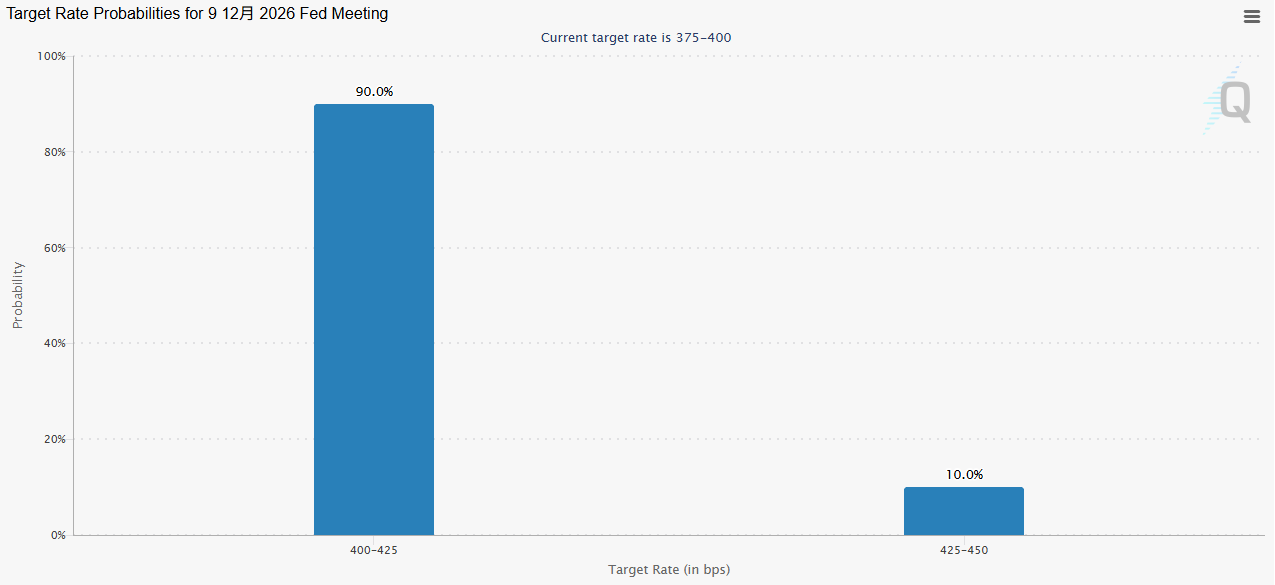
Minutes of the Fed’s October meeting showed that officials had already discussed larger increases. The Fed held its rate range at 3.75%–4.00% in October; Governors Lisa Cook and Cleveland Fed President Beth Hammack dissented in favor of an immediate increase. Two participants suggested considering a December move of more than 25 basis points if subsequent inflation data disappointed.
CME pricing cited in the November 19 report put the probability of a 25-basis-point December increase at 90%, against 10% for a 50-basis-point increase. It put the probability of a cumulative 50-basis-point increase by January at 75.5%, consistent with a market leaning toward 25 basis points at each meeting. Those probabilities described expectations at the time, not enacted policy.
Thin order books added to Bitcoin’s pressure
Bitwise chief investment officer Matt Hougan wrote on November 17 that unexpectedly high US inflation had lifted December rate-hike expectations, while roughly $2 billion in leveraged positions were liquidated during a thinly traded weekend, amplifying Bitcoin’s earlier drop toward $62,000.
After the October Fed minutes were released, attention also turned to whether a strong dollar and elevated Treasury yields would weigh on Bitcoin. Sygnum Bank chief investment officer Fabian Dori said institutional allocation and demand for a hedge against currency depreciation would determine how well Bitcoin could withstand that pressure.
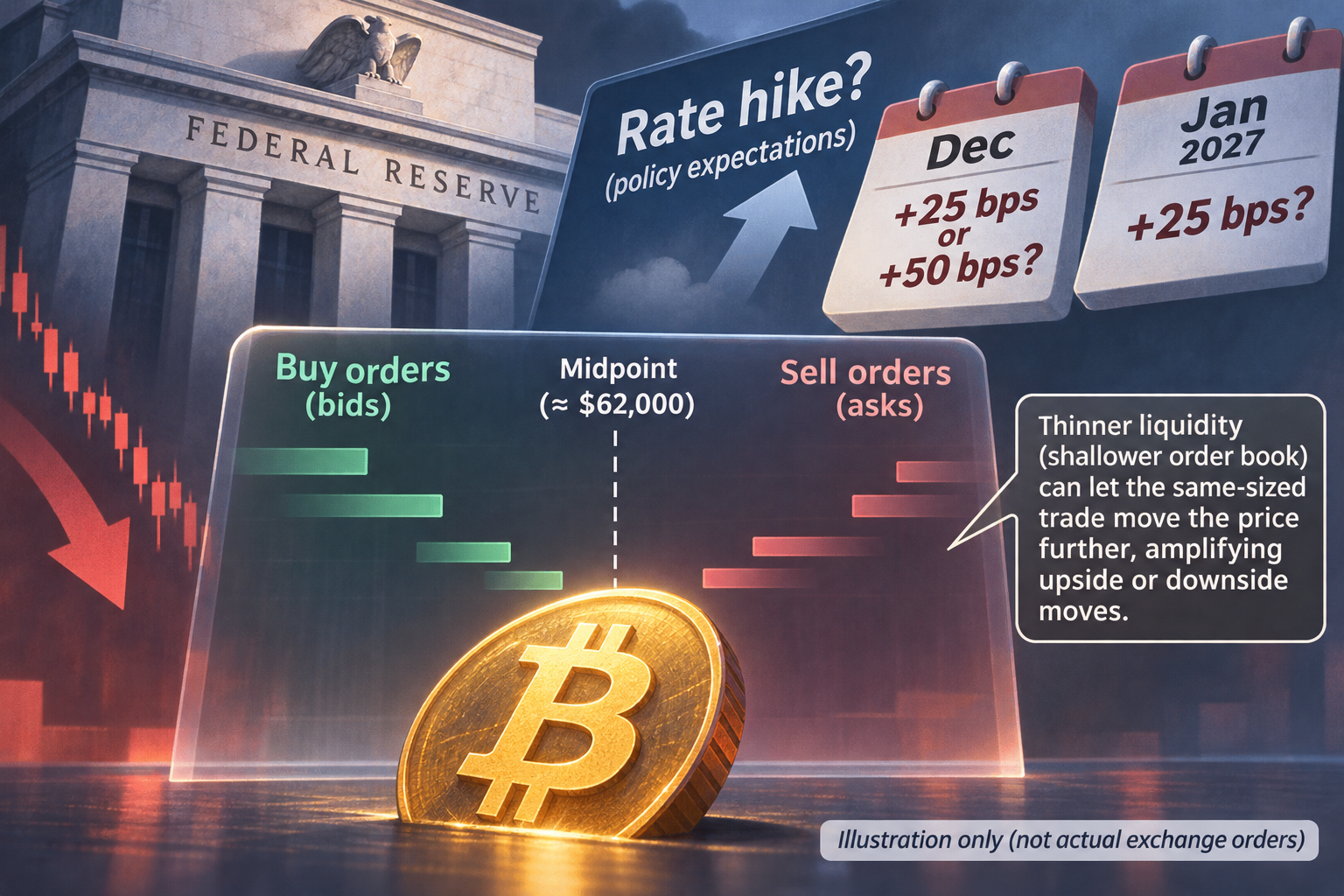
Spot buying had not visibly recovered, according to the report. Data from Talos showed that the total value of orders within 1% above and below Bitcoin’s midpoint was nearly 38% below its yearly high before the Binance theft referenced in the report. A thinner order book can allow a trade of the same size to move the price further in either direction.
Analysts disagreed on what the return to $62,000 meant. Bitget analyst Lewis Huang warned that further dollar and Treasury-yield gains, combined with a break below that area, could extend selling. Fidelity’s Jurrien Timmer said Bitcoin was near a support line in his long-term price model, while trader Peter Brandt raised the possibility of a bearish head-and-shoulders pattern if it were confirmed. None of those assessments established $62,000 as a floor.