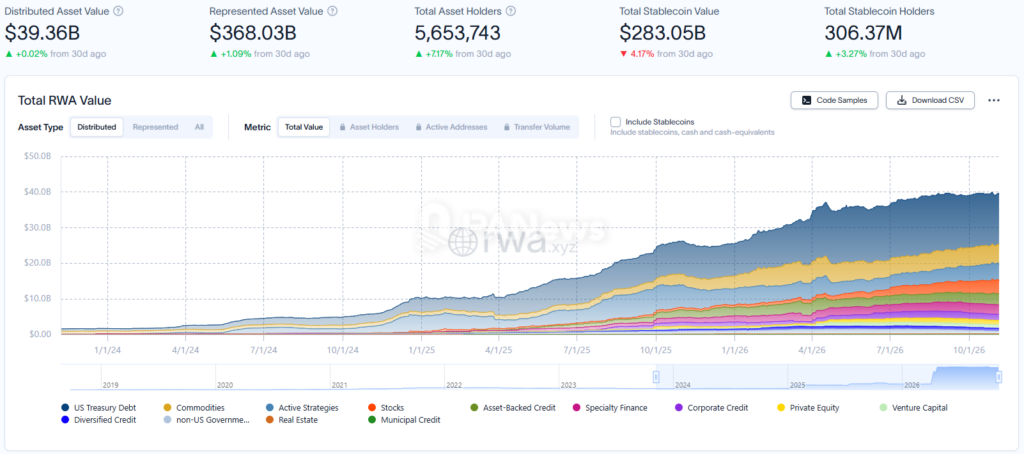
In a review covering October 30 to November 6, 2026, RWA.xyz data cited by PANews showed a split in stablecoin activity: market value declined from the same point a month earlier, while the reported monthly transfer volume rose. The figures describe circulation and use, not the quality of issuers’ reserves or the terms on which tokens can be redeemed.
Stablecoin supply and activity
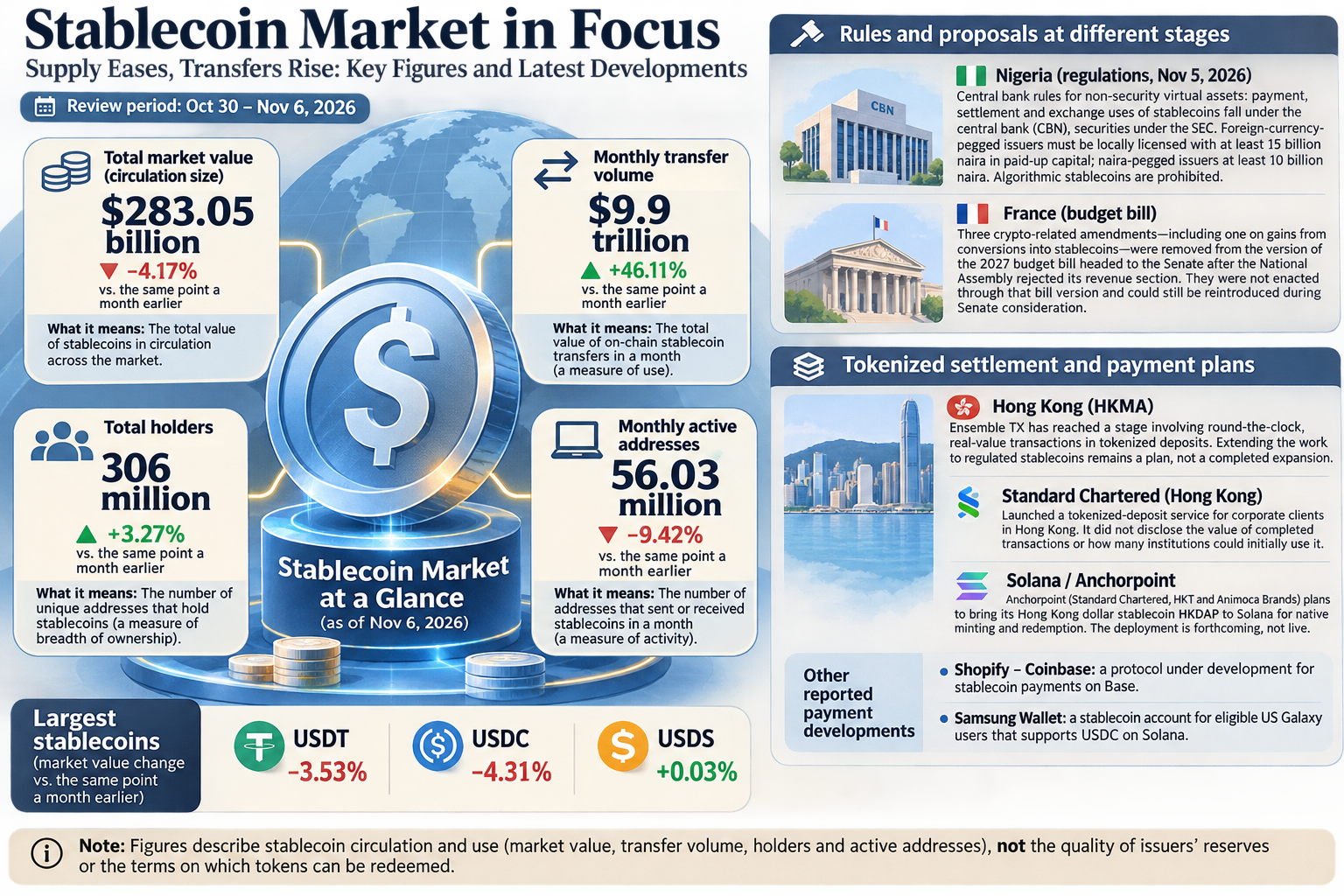
As of November 6, the review put total stablecoin market value at $283.05 billion, down 4.17% from the same point a month earlier. Monthly transfer volume reached $9.9 trillion, up 46.11% on that comparison. The number of holders rose 3.27% to 306 million, while monthly active addresses fell 9.42% to 56.03 million.
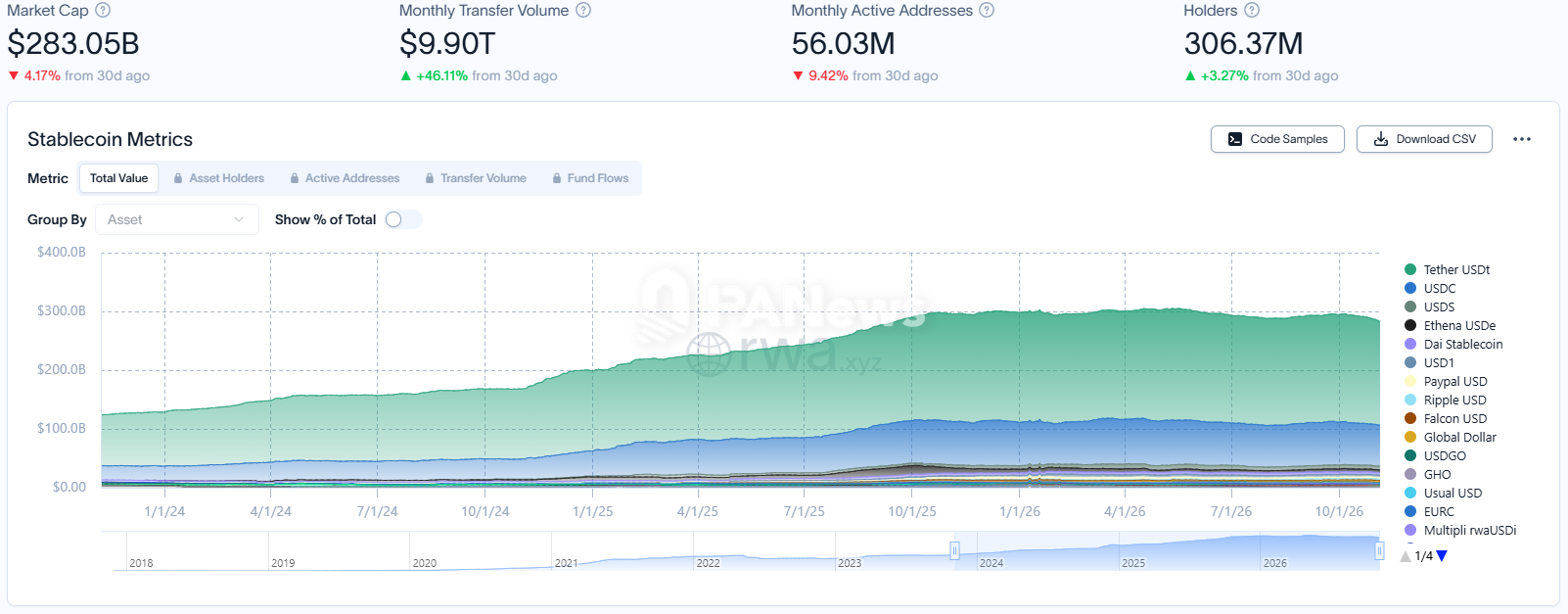
Among the stablecoins identified as the largest, USDT’s market value fell 3.53% and USDC’s fell 4.31%; USDS rose 0.03%, each compared with the same point a month earlier. The review did not provide reserve figures or redemption data for those tokens.
Rules and proposals remain at different stages
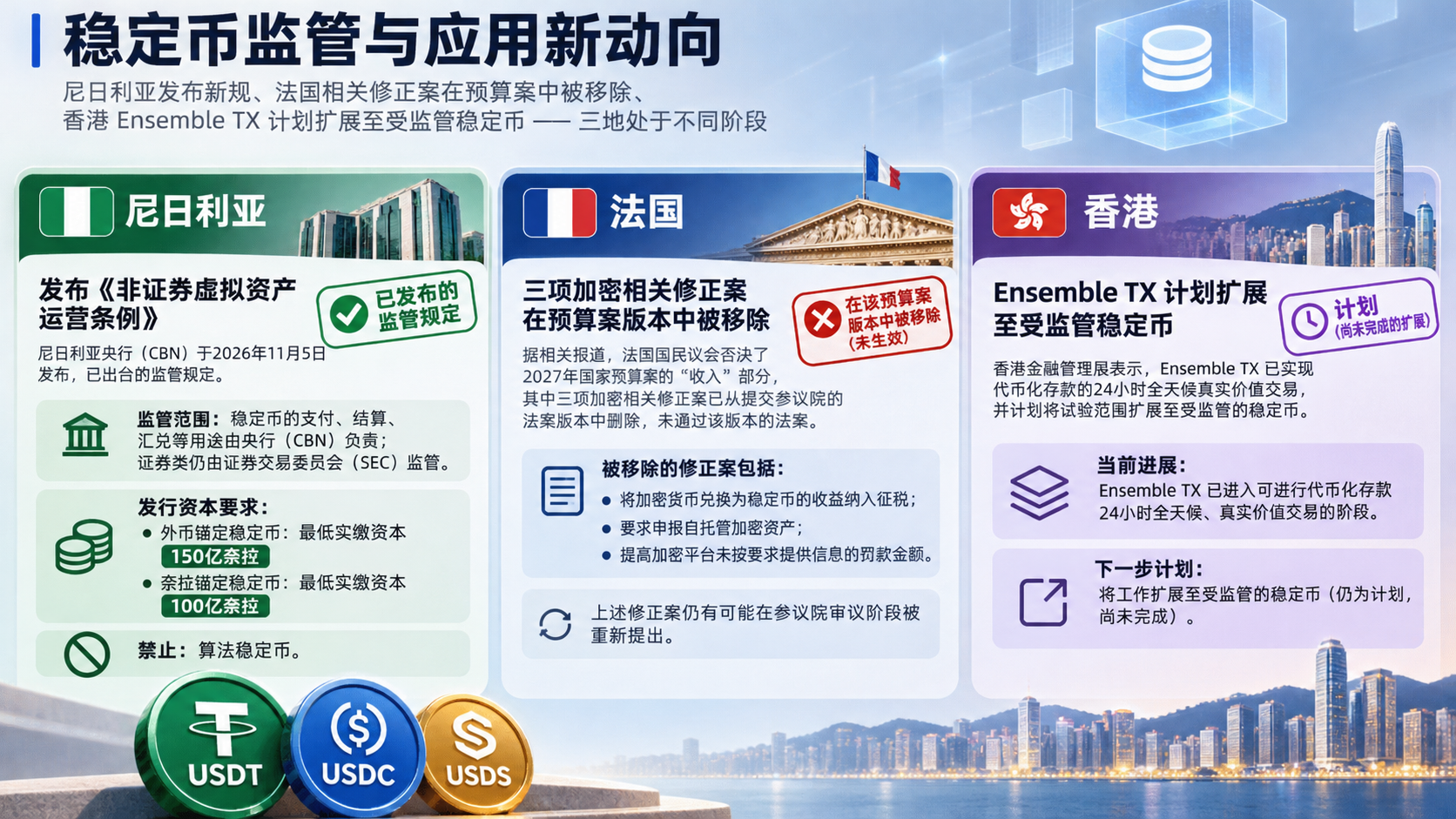
Nigeria’s central bank published regulations dated November 5, 2026 for non-security virtual assets. The review says they place payment, settlement and exchange uses of stablecoins under the central bank, while securities remain under the Securities and Exchange Commission. Foreign-currency-pegged stablecoin issuers must be locally licensed and have at least 15 billion naira in paid-up capital; the stated minimum for naira-pegged issuers is 10 billion naira. The regulations also prohibit algorithmic stablecoins.
In France, three crypto-related amendments—including one concerning gains from conversions into stablecoins—were removed from the version of the 2027 budget bill headed to the Senate after the National Assembly rejected its revenue section, according to the review’s account of a Cointelegraph report. They were not enacted through that bill version and could still be reintroduced during Senate consideration.
Tokenized settlement and payment plans
The Hong Kong Monetary Authority said Ensemble TX had reached a stage involving round-the-clock, real-value transactions in tokenized deposits. Extending the work to regulated stablecoins remained a plan, not a completed expansion. Separately, Standard Chartered launched a tokenized-deposit service for corporate clients in Hong Kong; it did not disclose the value of completed transactions or how many institutions could initially use it.
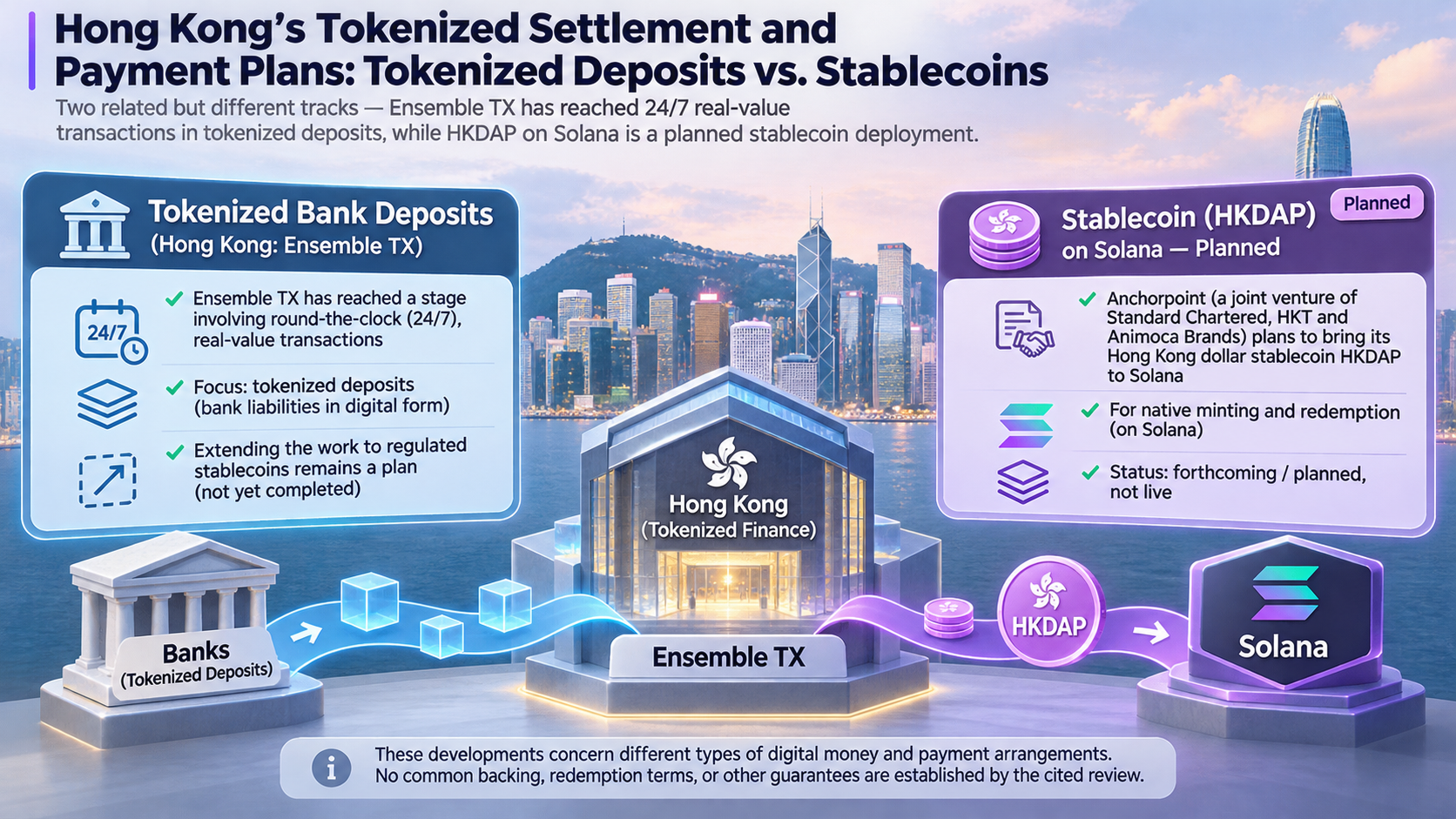
Solana said Anchorpoint, a joint venture of Standard Chartered, HKT and Animoca Brands, planned to bring its Hong Kong dollar stablecoin HKDAP to Solana for native minting and redemption. The review described that deployment as forthcoming, not live.
Other reported payment developments included a Shopify–Coinbase protocol under development for stablecoin payments on Base, and a Samsung Wallet stablecoin account for eligible US Galaxy users that supports USDC on Solana. Those services and plans concern different payment arrangements; the review does not establish common backing or redemption terms for them.