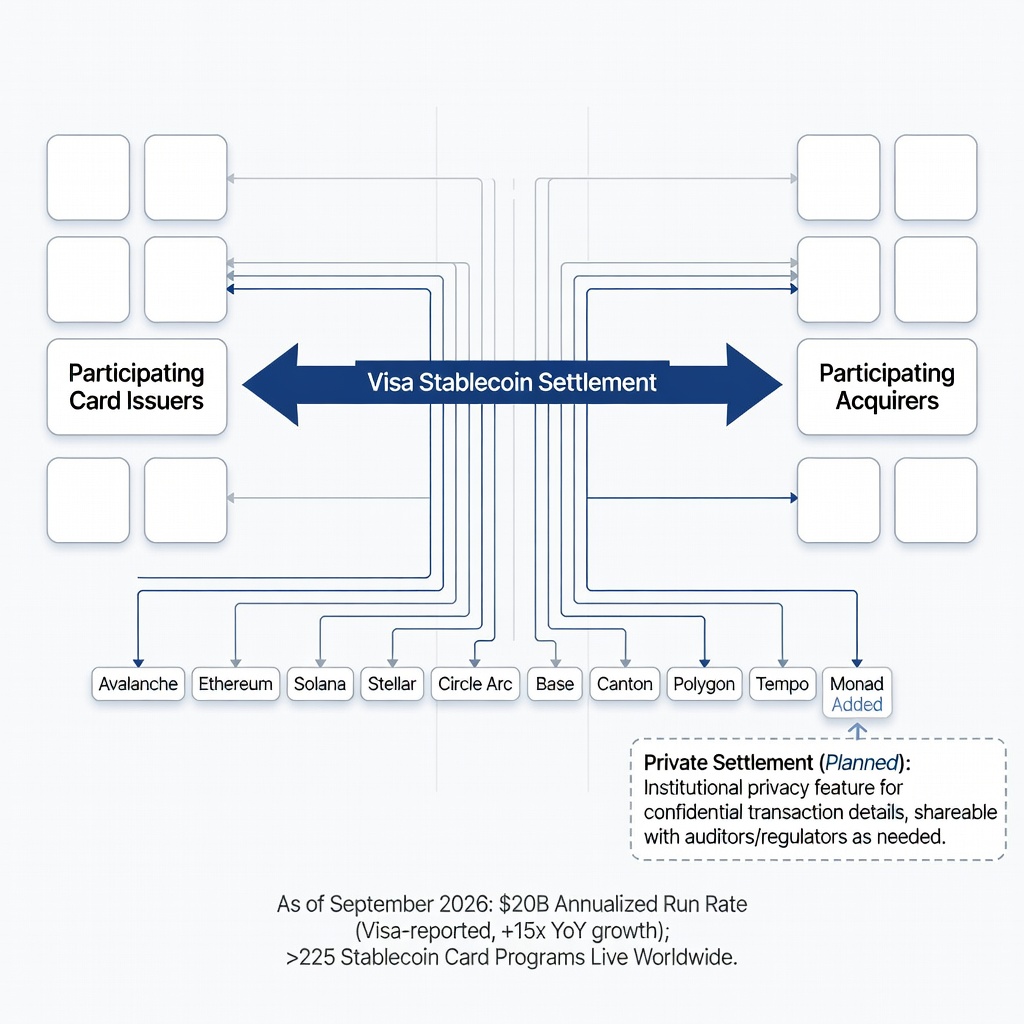
In Visa’s stablecoin settlement program, participating card issuers and acquirers settle with one another on a blockchain the program supports. That is a choice of settlement rail between those institutions. It is not evidence that a stablecoin is insured, guaranteed, or redeemable on any particular terms, and it does not describe reserves or an audit.
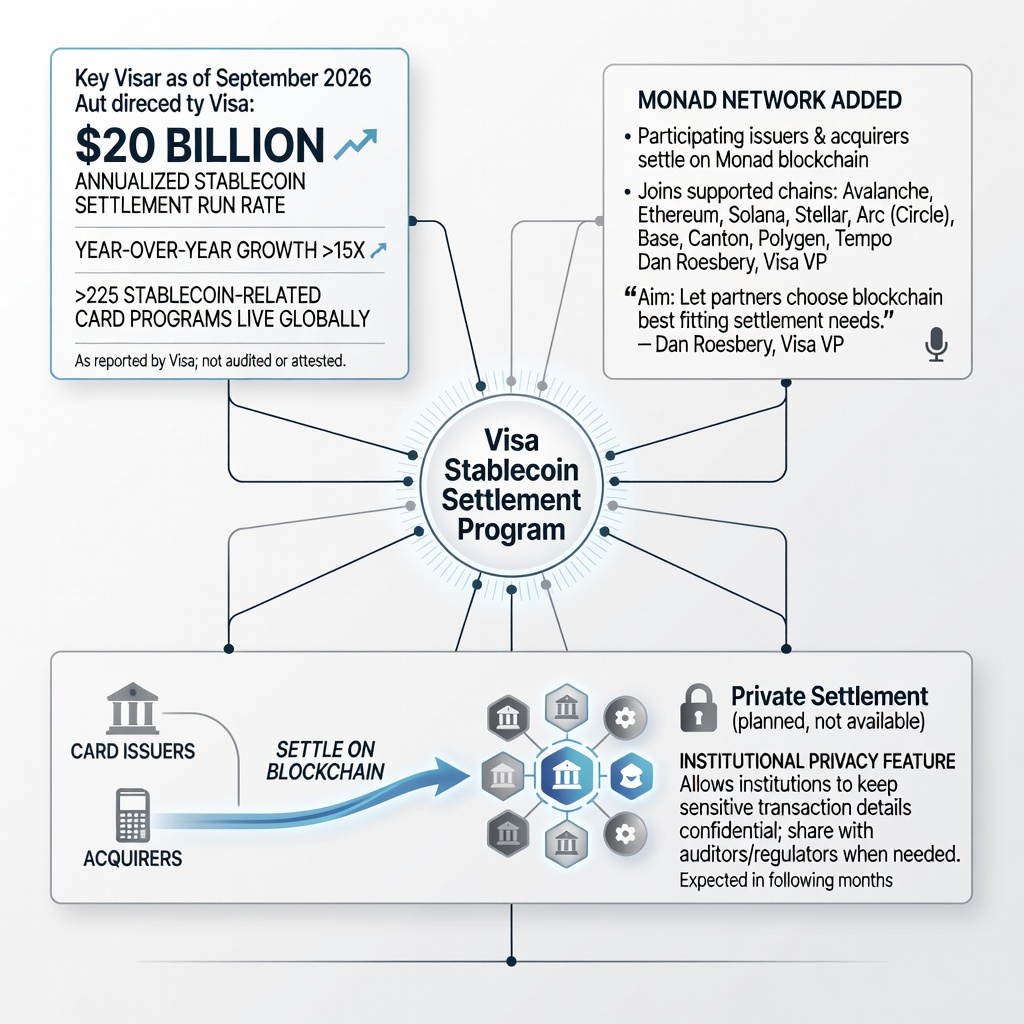
On November 10, 2026, at 22:11 CST, TechFlow Post reported—citing The Block—that Visa had added the Monad network to the program, so participating issuers and acquirers could settle on Monad. The Monad Foundation said Monad was joining blockchains Visa already supported: Avalanche, Ethereum, Solana, Stellar, Circle’s Arc, Base, Canton, Polygon, and Tempo.
Dan Roesbery, identified as Visa’s vice president of global on-chain partnerships and GTM, said in a statement that the aim was to let partners choose the blockchain that best fit their settlement needs. That is Visa’s stated objective, as relayed in the report, not an independent comparison of the chains.
Visa reported that, as of September 2026, its stablecoin-settlement annualized run rate was $20 billion, with year-over-year growth of more than 15 times, and that more than 225 stablecoin-related card programs were live worldwide. The article presents these as Visa’s figures. It does not present them as the result of an attestation or an audit.
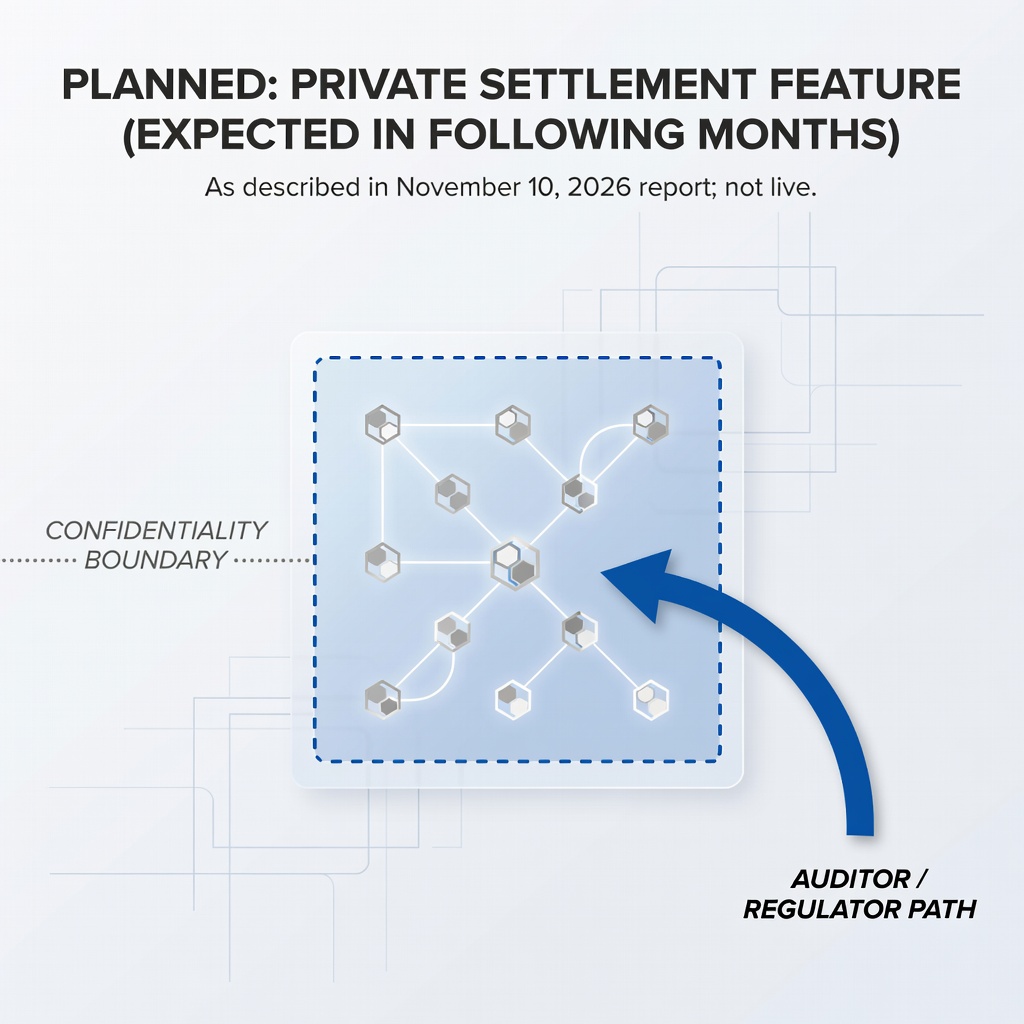
The Monad Foundation also said it was developing an institutional privacy feature, Private Settlement, which it then expected to introduce in the following months. As described, institutions could keep sensitive transaction details confidential and share them with auditors or regulators when needed. The November 10, 2026 report treated the feature as planned, not as something already available.
Original article: TechFlow Post, November 10, 2026, 22:11 CST.