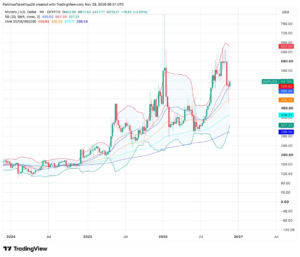
U.S. spot Bitcoin ETFs recorded $570 million in net outflows on Nov. 23, 2026, after $669 million in net outflows on Nov. 20, according to Farside Investors. Bitcoin traded near $55,100 early on Nov. 21, approached $64,000 on Nov. 23 and then pulled back toward $62,500. The price rebound did not translate into net inflows through the funds that day.
The bond market offered a separate measure of risk appetite. In the week before Bitcoin’s rebound, investors demanded more yield over Treasuries to hold U.S. corporate debt. That premium rose most for the lowest-rated bonds, according to ICE BofA daily closing data published Nov. 23 by the Federal Reserve Bank of St. Louis.
The premium rose most for bonds rated CCC or lower
An option-adjusted spread measures a bond’s yield premium over the Treasury curve after accounting for options built into the bond. Between the Nov. 16 and Nov. 20 closes, spreads widened across all three ICE BofA indexes:
| U.S. corporate bond index | Nov. 16 spread | Nov. 20 spread | Change |
|---|---|---|---|
| Investment grade | 0.90% | 0.98% | +8 basis points |
| High yield | 3.34% | 3.76% | +42 basis points |
| CCC and lower | 13.10% | 14.02% | +92 basis points |
Bonds rated CCC or lower are part of the high-yield index. Their effective yield rose from 17.88% to 18.61%, compared with a rise from 8.25% to 8.46% for high yield overall. These are yields implied by prices and payments on existing bonds, not rates quoted to companies seeking new financing.
Investment-grade bonds illustrate why the distinction between yield and spread matters: their effective yield fell from 5.95% to 5.84%, yet their premium over the Treasury curve widened. The two-year Treasury yield fell from 4.83% to 4.63% over the same period.

What the two markets can tell us
The authors of The Crypto Cycle and US Monetary Policy, a 2023 IMF working paper, found that U.S. monetary tightening weighed on a common factor in crypto prices by reducing investors’ willingness to take risk. They identified a similar channel in equities. Wider credit spreads and spot Bitcoin ETF outflows are consistent with caution in both markets, but neither establishes why Bitcoin rebounded or why it subsequently pulled back.
Narrowing spreads alongside renewed ETF inflows would support a broader recovery in risk appetite. If ETF inflows instead persisted while spreads stayed wide, that would point to a more limited conclusion: demand through Bitcoin funds had recovered even as bond investors continued to require a higher premium.