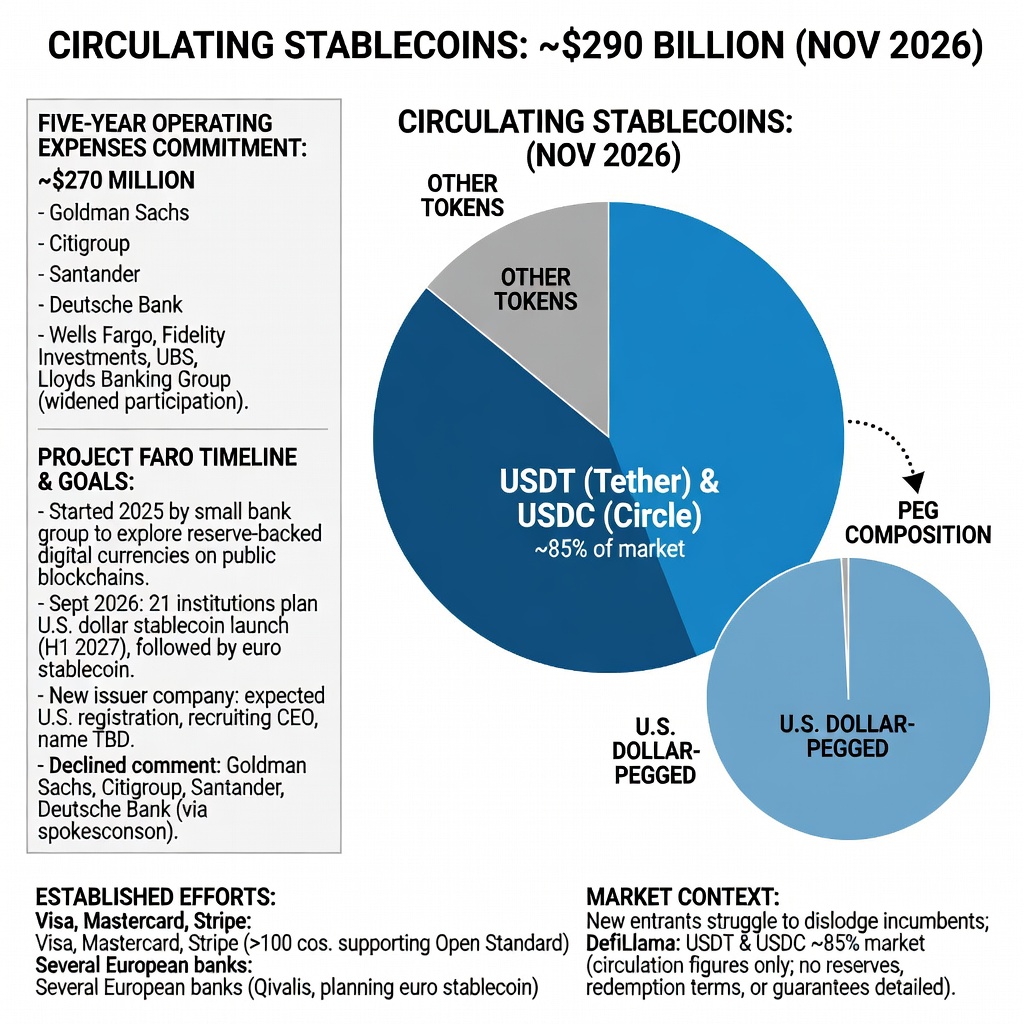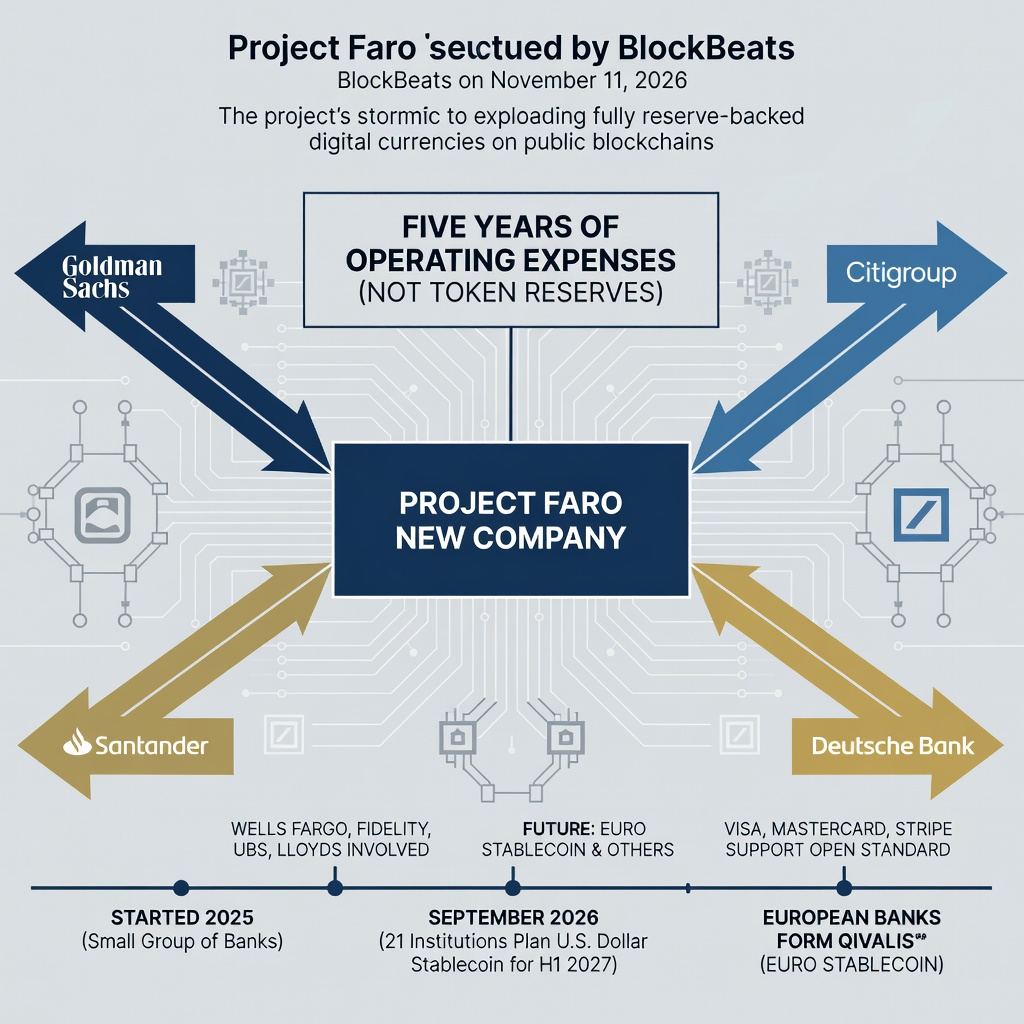
On November 11, 2026, BlockBeats reported, citing Bloomberg and people familiar with the matter, that Goldman Sachs, Citigroup, Santander and Deutsche Bank were among institutions that had committed about $270 million to Project Faro. The funds are intended to cover five years of operating expenses for a new company. They were not described as reserves for any token.
Project Faro was started by a small group of banks in 2025 to explore issuing fully reserve-backed digital currencies on public blockchains. In September 2026, 21 institutions set out a plan to launch a U.S. dollar stablecoin in the first half of 2027 and, after that, stablecoins linked to other currencies, beginning with a euro stablecoin.
People familiar with the project said the company that would issue the stablecoin is expected to be registered in the United States. It is recruiting a chief executive, and a formal name is still under discussion. Goldman Sachs and Citigroup referred questions to a project spokesperson, who declined to comment. Santander and Deutsche Bank also declined to comment.
Participation later widened. Wells Fargo, Fidelity Investments, UBS and Lloyds Banking Group are also involved.
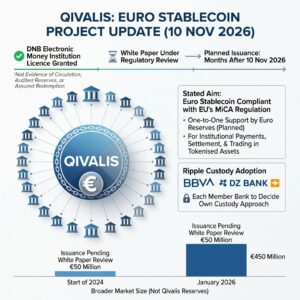
The same report noted other stablecoin efforts by established firms. Visa, Mastercard and Stripe are among more than 100 companies supporting the issuer Open Standard. Separately, several European banks formed Qivalis and plan to issue a euro stablecoin.
As of the report, circulating stablecoins totaled about $290 billion and were almost entirely pegged to the U.S. dollar. BlockBeats wrote that, even as large financial institutions move faster, new entrants still find it difficult to dislodge existing issuers. DefiLlama data cited in the report put Tether’s USDT and Circle’s USDC together at about 85 percent of the stablecoin market. Those figures describe circulation, not reserve composition, redemption terms or any form of guarantee or insurance.
The operating-cost commitment and the project’s stated aim of full reserve backing are separate points in the reporting. The account did not include a reserve breakdown, an attestation or redemption terms.